Tuesday, 14 April 2009

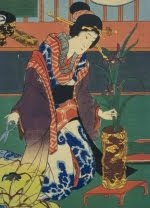
Ikebana Exhibiton - Beauty and Magic

Back home after hard work preparing for the exhibition Japanese Week - Beauty and Magic in the Oslo City Hall Gallery. The exhibition opens on Thursday April 16, and will be running until Thursday April 23.

When we're done the exhibition hall will look great, and will house one of the largest ikebana exhibitions that has been held in Oslo. There will also be wood prints, kimonos and tea ceremony demonstrations.

Don't miss this oportunity to experience the beauty and magic of ikebana.

Free entrance.

Opening ours: Monday-Friday 10am-6pm, Saturday 10am-4pm, Sunday 11am-5pm.

Entrance from the sea-side.

Monday, 13 April 2009

Decalcomania, Surrealism and Ikebana

Louisiana Museum of Modern Art (outside of Copenhagen) is currently running an exhibition on Max Ernst - Dream and Revolution. A large selection of works is presented, from Ernst's dadaistic and surrealistic periods and further on to the playful techinques that he adopted to his art.

What strikes me when I see an exhibition like this is how strong the influence of surrealism have been, and still is, on the Sogetsu School of Ikebana. Sofu Teshigahara picked up a lot from the modern European art, not so much the philosophy but the styles and techniques. Surrealism was used to get a direct approach to creativity, and to grasp the unexpected and random in the process of making a free style ikebana arrangement. Sofu often used untraditional matherials in his surrealsitic arrangements. I will try and post a few pictures when i get my scanner to work.

One of the techiques favored by the surrealists is decalcomania. Paint is applied somewhat randomly on a sheat of paper. Then another sheat of paper is pressed towards it, creating an interesting pattern. Ernst used this technique as a starting point for his faboulus fantacy landscape paintings. In the Sogetsu school decalcomania is used to create an unexpected pattern that serves as inspiration for an ikebana arrangement. I'm posting two examples so you get a feeling of it.

Decalcomania and ikebana, mass of Ranunculus.
Detail of decalcomania and Ikebana arrangement: "When spring is here she wears her yellow kimono", Tulips, Ephedra and Ranunculus.

Max Ernst - Dream and Revolution is running until June 1, 2009.

From the presentation text: "Max Ernst was a hypermodern, adaptable artist. Like a vagabond he turned his life into one long journey – constantly renewing his artistic activity and himself. He was always on his way in and out of new modes of exspression, in search of development and change. He never came to a halt with any single style but continued to explore and experiment with art".

Thursday, 9 April 2009

Bending Branches in Bloom

It's spring and time for blossoming branches. This video shows an advanced method of making curved lines by putting wedges into the branch. It's a classical ikebana thechnique that is not used in this extreme way in modern schools. To me it looks kind of cruel to the branches. Anyhow it's interesting and beautiful to look at. The video is from the Kadou Enshu school of ikebana.

Heaven, Earth and Human

To all of you that are interested in the symbolic meanings of ikebana - please check this out. Sogetsu teacher Ping Wei has an interesting comment on the principles of heaven, earth and human on his new blog.

"Heaven" is the sky, the freedom. In order to fully express "heaven" in our ikebana, we need to be free. ... "Earth" is the ground, the disciplines and the rules. Without disciplines and rules, things will fall apart. ... We "human" are in the middle. Our job is to bring "heaven" and "earth" in perfect harmony. It's not an easy task, but that's what we keep studying for.
(Quote from Ping Wei, Ikebana in Desert on Blogspot)

Sunday, 29 March 2009

Ikebana at the Department Store

I've held my first public ikebana demonstration, at Steen & Strøm department store in Oslo. My teacher, Lisbeth Lerum, and I also put together a small exhibition featuring different styles of Sogetsu ikebana.
When demonstrating one stands behind a table, arranging without really seeing what the arrangement looks like from the front.
Basic slanting arrangement with yellow Forsythia branches and pink roses.

Traditional Tea in Contemporary Environment


Last Saturday I had the opportunity to watch a tea ceremony in Ryo Yamada's Tea House installation at Steen & Strøm Magasin in Oslo. Urasenke tea master Svein Westad from Kongsberg demonstrated the whole ceremony, that could be watched through the cardboard pipes of the installation.


Friday, 27 March 2009

Edible Composition

Freestyle ikebana with veggies - teasingly tasteful!

Kasawa (Cassava), Cucumber, Kohlrabi and Habanero.


Turnip, Cucumber and Habanero.

Sunday, 22 March 2009

Horizontal Lines

Naturalistic arrangement - Cherry branches and Hydrangea.


Abstract arrangemnet - Calla lily, colored straw and Bergenia leaf.

Saturday, 21 March 2009

The Taking Apart of a Lily

This is the result of a playful practice with the goal to see a material with new eyes by taking it apart, study it, and put it together in new ways. To make it more challenging I desided to limit the task to Ishu-ike arrangements (arrangement with only one material).

Featuring petal, pistil and stamens.


Focusing on the shape of the Lily leaves.


The stems in their own rigth, with the leaves bunched up.


Resting on the stem crotches.

Wednesday, 18 March 2009

Windows of Beauty and Magic

My ikebana teacher Lisbeth Lerum has been working really hard preparing for the Japan Days this year. The ikebana part of the exhibitions is taking place in Steen & Strøm department store until March 28, and in Oslo Town Hall from April 16 to April 23.

The theme for this years exhibition is "Beauty and Magic".

Kimino window by Lisbeth Lerum.


Avant garde ikebana window by Lisbeth Lerum.

Related Posts with Thumbnails